
I Love Feedback, But Don't Give Me Any!
Abbas
•5 min read
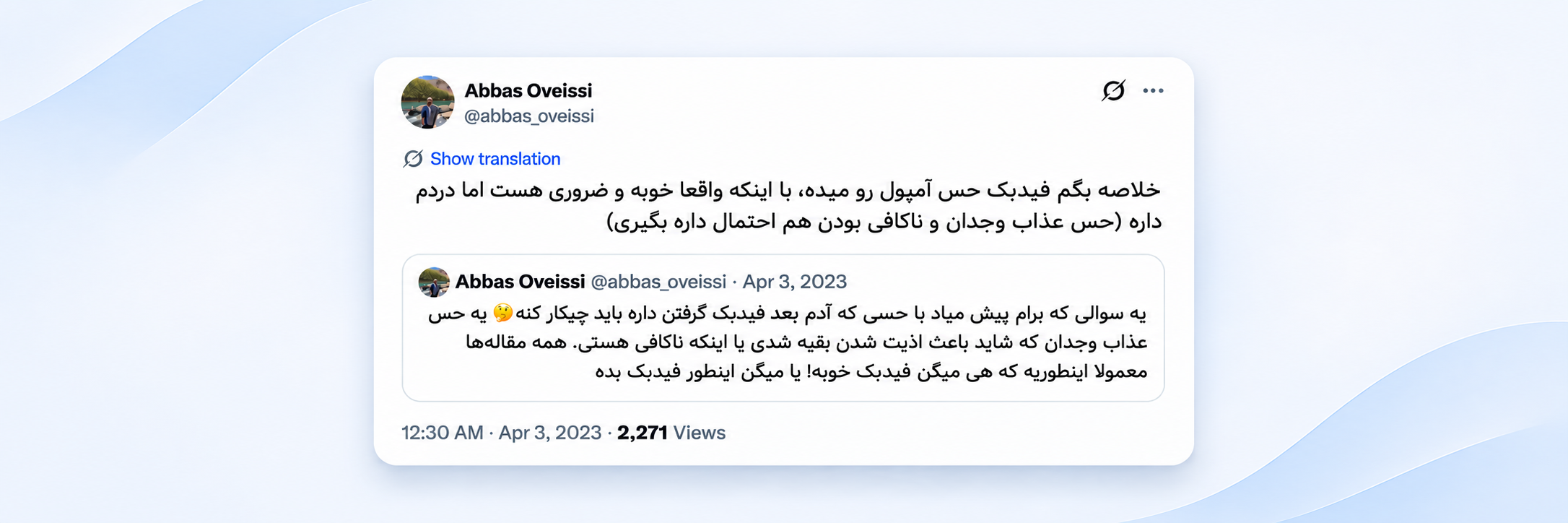
In 2023, I posted something on Twitter (now X) in Farsi that roughly translates to: "To put it simply, receiving feedback feels like getting a shot. Even though it's good and necessary, it still hurts (You might even feel guilty or inadequate)"

At that time, I liked receiving feedback, but whenever someone wanted to give me feedback, I felt nervous or embarrassed. Even when I accepted what they said, I often felt frustrated or bad about myself. I thought this was a personal issue related to my personality, something I had to live with. But over time, I understood that receiving feedback is actually a skill I can develop, not just a personality trait.
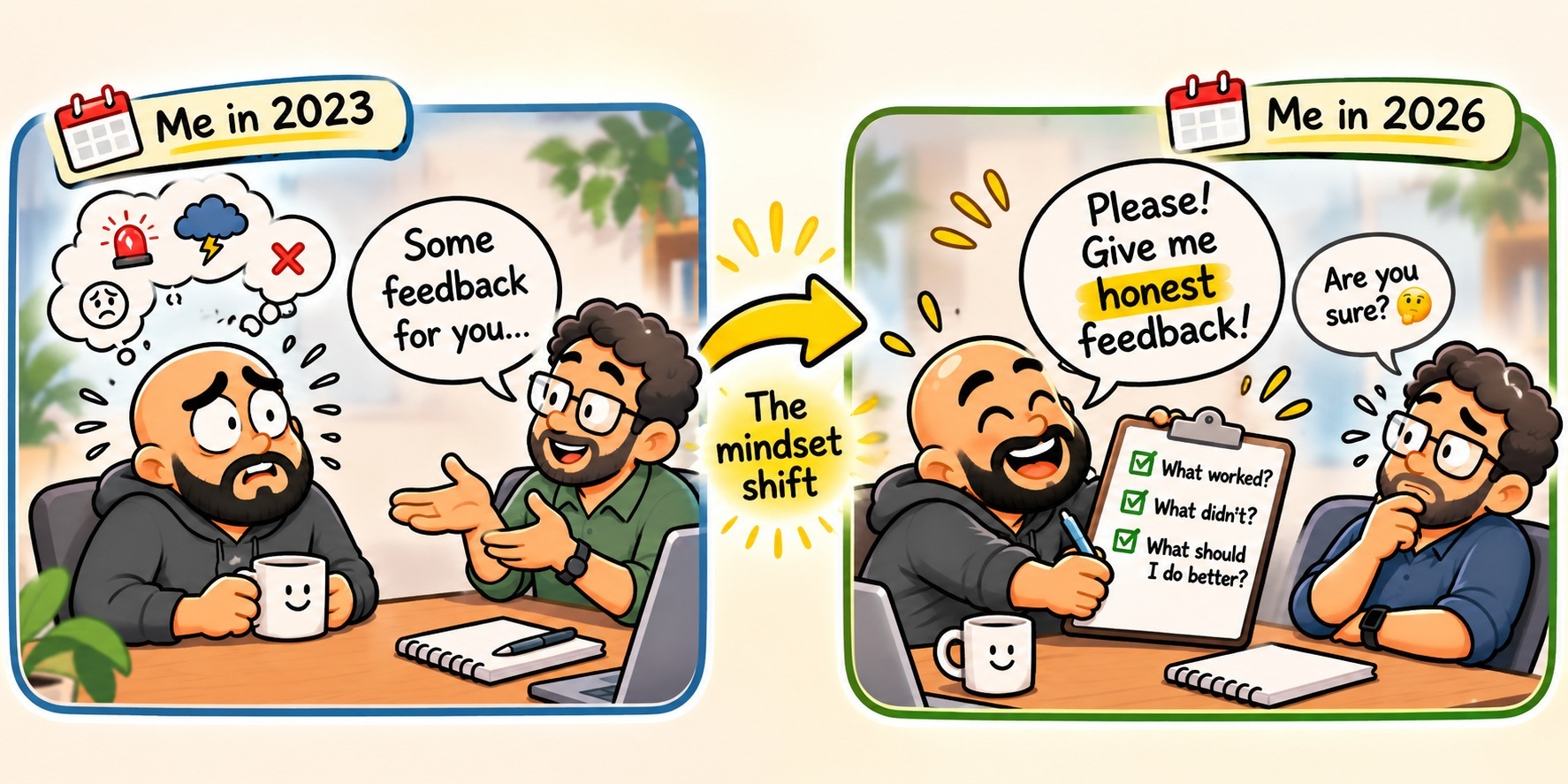
Here, I want to share my story, how my feelings have changed since 2023, and some simple tips that you might find useful. The image below shows how my attitude toward feedback has changed over these three years, from feeling nervous about receiving it to actively asking people for feedback.
So, how did I get here?
First, there was no golden rule. I had to attend feedback sessions at the company, so I can say I was forced to practice this a lot. Every month, I had meetings with multiple people who gave me feedback about myself.
Looking back, I think having these meetings regularly was one of the things that helped me the most.
Second, I learned something from my former CEO. When we had feedback meetings, he pushed me to give him constructive feedback. So I tried to do the same with other people. I tried to get out of my comfort zone and insist that people give me constructive feedback, even when they were hesitant.
Third, another important thing I learned is that I don't always need to prove that what people say is wrong or that there is a misunderstanding. Sometimes, you can just listen. There are many times when you can explain things later or even show through your actions that the person's understanding wasn't right. But receiving feedback isn't a court trial. Nobody is accusing you of a crime, and you don't always need to defend yourself immediately.
Fourth, after receiving constructive feedback many times, I started to feel less nervous or ashamed about it. Maybe I didn't do something well, maybe there was a misunderstanding, or maybe something I did made another person feel bad. But I noticed that people were happier when they could share their feedback with me. Instead of seeing feedback as something wrong that someone was telling me, it became a normal conversation where we could talk about both good and bad things.
What Should I Do With All This Feedback?
After a while, I became much more comfortable receiving feedback. But then I faced another challenge. I had talked to many different people and received feedback from different teams and individuals. Sometimes, I felt overwhelmed and didn't really know what to do.
For example, sometimes multiple people gave me feedback that seemed right, but their feedback contradicted each other. Or I had written down a lot of feedback as notes for myself, but of course, I couldn't address everything in a short time. Some issues were related to external factors, and some were related to myself.
At first, my challenge was receiving feedback. But now, my challenge was deciding what to do with it.
- I started to explain the reasons behind my decisions more clearly. As a leader, you have to make many decisions, sometimes with incomplete information. So you might make a wrong decision based on what you knew at that time. By explaining the reasons behind your decisions, you can help people understand that it wasn't personal or something you intentionally did to make them feel bad.
- I started to apply some of the feedback. Sometimes, even changing small things, like removing a word or phrase from how I talked to people, had a great impact. For example, someone told me that when I was talking to them in meetings or writing messages on Slack, I often started with "As I told you before" before explaining my point. I realized that this phrase could make people feel like they had made a mistake or that I was blaming them. So I stopped using it and simply shared my point without reminding them that I had said it before. Other times, I tried to make bigger changes, like finding issues in our processes and fixing them to make people's work easier.
- I learned that I don't need to act on every piece of feedback. Sometimes, I just need to listen to it, but based on the goals we have, I might need to postpone addressing it. Or when feedback from different people contradicts each other, I need to decide which feedback is more important based on our team's goals.
I learned that listening to feedback doesn't mean I have to agree with or act on everything.
Conclusion
After all these experiences, I feel much better about receiving feedback, and I guess my teammates do too. We can have conversations about our difficulties, emotions, decisions, and anything that makes us feel good or bad. I think this has helped us create a better working environment.
At the beginning, hearing something negative or constructive about myself made me feel bad. And to be fair, hearing something negative about yourself is never easy.
But after practicing this many times, I learned how to manage these feelings and use feedback to improve myself and the working environment, instead of avoiding conversations because I was afraid of hearing something negative.
Feedback still feels like getting a shot sometimes. But at least now, I don't try to run away from it.